Sunset at Four: Rebuilding Your Afternoon When the Light Goes
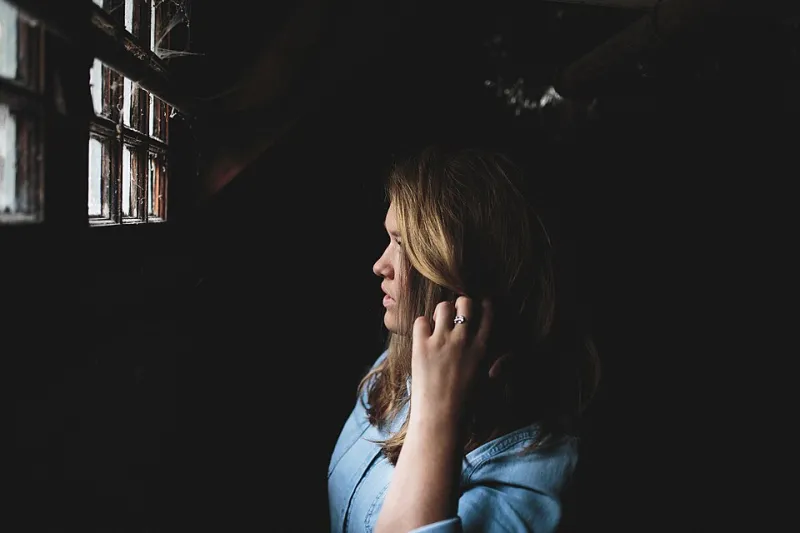
Photo: Andrew Neel andrewtneel, CC0, via Wikimedia Commons
There's a particular moment in November, somewhere around quarter to four, when you look up from your desk and the window has gone the colour of a tarnished teaspoon. The clocks went back on 25 October this year, and by bonfire night most of the country is dark before the school run finishes. It's not dramatic. It's just quietly deflating, day after day.
The 3pm dip isn't a character flaw
Here's the thing about that mid-afternoon slump: it's normal. Most people's cortisol and alertness dip in the early afternoon anyway, light or no light. Add a sunset at 16:20 and a sky the colour of wet cardboard, and the brain gets a fairly loud message that the day is wrapping up. Cue the third coffee, the biscuit tin, the doomscroll on the sofa at 6pm while dinner is still a theoretical concept.
So no, you're not lazy. You're a mammal in a dark country in winter. That's the starting point for anything sensible.
What light actually does (and why it matters more than most supplements)
The short version: daylight is the main signal that sets your body clock. Morning and midday light helps keep melatonin — the hormone that makes you sleepy — in its lane. Less light, less signal, more afternoon fog. For a small number of people this escalates into seasonal affective disorder, which is a recognised condition and needs proper support from a GP rather than a bottle from a shelf.
Which brings us to the honest bit.
Where CBD fits — and where it doesn't
CBD is not a treatment for seasonal low mood. It is not a substitute for daylight, sleep, movement or medical care. What it is, for plenty of people, is a small, pleasant part of a wind-down or a pause — something that marks a transition between "on" and "off". The research base is still young, responses vary wildly between individuals, and anyone telling you a dropper will fix your winter is selling, not explaining.
In the UK, CBD is regulated as a novel food rather than a medicine — which is why you'll see the familiar lines about not being suitable for under-18s, not for pregnancy or breastfeeding, and checking with a doctor if you're on medication. Take those seriously. If you're taking prescribed medication, especially anything metabolised by the liver, that's a conversation to have with a pharmacist or GP before you start.
The mid-afternoon ritual (somewhere between 14:45 and 15:30)
If you're going to build a CBD habit, the timing is the interesting part. Lots of people treat it as an emergency lever — the moment they feel flat, they reach for the bottle. That tends to be the least satisfying way to use it, because you're expecting a switch to flip and there isn't one.
A better frame is a pause with a job. Something like:
- A consistent slot. Same rough time each day, mid-afternoon, before the fog sets in rather than after it's already sitting on your chest.
- A physical anchor. Kettle on. Drops under the tongue, held for 60 to 90 seconds before swallowing. Then a proper stretch, or two minutes standing at a window even if the window shows nothing but grey.
- A modest amount. Start low. A 500mg 10ml bottle works out at roughly 2.5mg per drop, so "a few drops" is a real dose, not a token gesture. Log what you took and how you felt an hour later — you're gathering data about yourself, not chasing a feeling.
- No top-ups on a whim. If you're reaching for a second helping within the hour, the drop wasn't the problem.
Sublingual use tends to feel like the quickest route in, though the evidence on absorption is fuzzier than the marketing suggests. Some people prefer to add CBD to an evening drink or take a capsule earlier in the day. There's no single correct answer here, only what's repeatable for you.
The post-work walk beats the drops
If you only change one thing, change this. Twenty minutes outside after work — even in drizzle, even at dusk — gives your body light signals that no oil can replicate. Take the call outside. Walk the long way to the shop. Get off the bus a stop early. Combine it with your CBD slot if it helps you remember, but don't confuse the two: one is a supplement of uncertain size, the other is daylight, and daylight is doing a lot more work.
A waterproof coat is cheaper than a SAD lamp and works on more occasions.
The evening wind-down is where routines actually pay off
Most people I've spoken to about this use CBD in the evening, not the afternoon, and there's a case for both. The evening version is about signalling: the day is done, screens go dim, the big light goes off, something warm in a mug, a few drops, a book you actually want to read.
The mistake is treating it as a sedative. CBD isn't one. What it can be is a marker in an evening routine that happens to work — the sort of thing that helps you notice you're winding down rather than falling asleep mid-scroll with your phone on your face.
A realistic first fortnight
Nothing heroic. Pick a time, pick a strength, write down what you take for fourteen days, and keep everything else the same so you can actually tell whether it's doing anything. Get outside at lunch if you can. Move the walk earlier in the day when the light is at its best. Keep a bottle of water on the desk. Go to bed at a time a reasonable adult would be mildly embarrassed not to manage.
And if the low mood runs deeper than a 3pm slump — if it's most of the day, most days, if you've lost interest in things you normally love — that's a GP conversation, not a product one.
The short version
Shorter days are a real physiological nudge, not a personality test. Light does the heavy lifting. Sleep, movement and food do most of the rest. CBD, used modestly and consistently, can be a pleasant part of a routine that tells your body the afternoon isn't over yet — and that the evening has begun. That's not a miracle. It's just a nice thing to do, done sensibly.