The Six O'Clock Threshold: Coming Off Shift Without Bringing Work Through the Door
There is a particular kind of tiredness that comes with a bad shift. Not the soft, ready-for-bed kind. The wired kind. The sort where you are technically home, but your head is still in the stockroom, the ward, the kitchen, the van, or the queue that would not move. You walk through the door with your shoulders up by your ears and your evening starts at full volume.
The fix is not a big wellness programme. It is a threshold: a short, repeatable moment at the door that tells your body the shift is over. Two minutes, maybe three. No app, no journal, no scented candle you have to remember to light. Just a way of coming home on purpose.
The bit between work and home
Most of us treat the front door as a place to dump stuff and keep moving. Keys on the side, coat on the chair, shoes kicked somewhere near the mat. Then straight to the kettle, the phone, the fridge, the next thing.
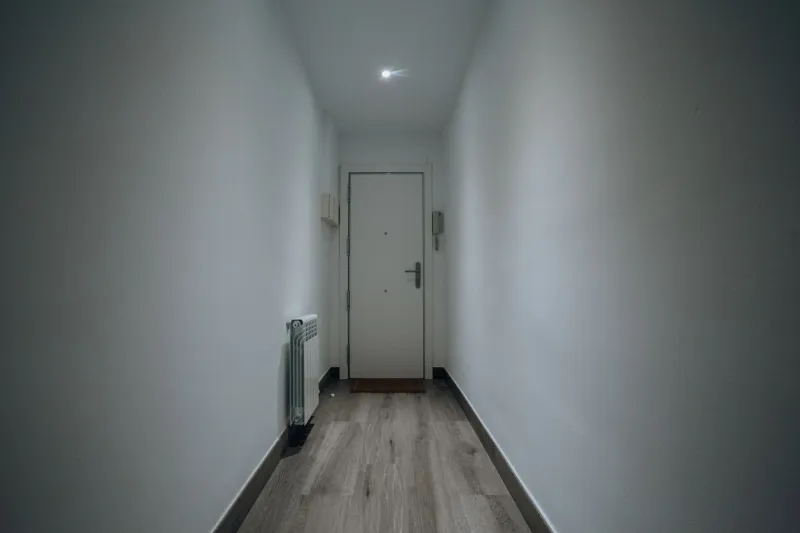
But the door is a useful seam. It is the one point in the day where you are neither at work nor fully at home. If you rush through it, you carry the shift in with you. If you use it, even slightly, you give yourself a landing strip.
This is not about being precious. It is about noticing that the way you arrive shapes the next hour. A soft landing is not the same as switching off. You might still feel restless. The aim is simply to lower the volume before the evening begins.
A two-minute doorstep routine
Keep it small enough that you will actually do it on a wet Tuesday when you are hungry and fed up.
1. Keys down first
Not in your pocket. Not in your hand while you check one last message. Keys go in the same bowl, hook, or drawer every time. That is the first signal: the working part of the day is parking itself.
If you can, put your phone down at the same moment. Not forever. Just for the length of the routine. A phone in your hand is a direct line back to the shift.
2. Shoes off, properly
Sit down if you need to. Untie the laces. Feel the floor. This sounds almost too simple, but it is a physical change of state. Work shoes by the door, house shoes or socks on. Your feet get the message before your brain does.
3. Three slow breaths
Not big dramatic breaths. Just three where the out-breath is a little longer than the in-breath. Let your shoulders drop. Unclench your jaw. Notice the room you are standing in.
That is it. Keys, shoes, breaths. If you want a fourth move, hang your coat up and put your bag out of sight. Then go and put the kettle on.
Where CBD might fit, if you use it
If CBD is already part of your routine, this is a sensible place for a low-dose product: after the shoes are off, before the kettle boils. Not because the doorstep ritual needs a product to complete it. It does not. But because a small, consistent habit is easier to keep than a vague intention.
A few practical notes for UK readers:
- Keep it simple. One product, one familiar dose, one place. A dropper bottle by the door is not a great look, but a tin of balm in your coat pocket or a bottle next to the kettle can work.
- Read the label properly. Look for the amount of CBD per drop or per serving, not just the size of the bottle. UK labels vary, and stronger is not automatically better.
- Do not stack it with everything else. If you are already taking medication, pregnant, breastfeeding, or managing a health condition, speak to a pharmacist or GP before adding CBD. It is not a medicine and it is not a substitute for one.
- Do not drive on autopilot. CBD is not the same as THC, but check the product label and use your judgement. If you feel at all unsure, do not drive.
The point is not to sedate yourself into the evening. It is to create a pause. If a low-dose CBD product helps you mark that pause, fine. If it becomes another box to tick, leave it out.
The trap of turning it into another task
The quickest way to ruin a good ritual is to make it a performance. You do not need a five-step evening protocol, a mood journal, a supplement stack, and a scented pillow spray. You need a hinge between work and home.
So keep the bar low. If you forget the breaths, do them at the kettle. If you forget the shoes, take them off in the hall and start again. The routine is not a test. It is a signal.
And if you are the kind of person who arrives home and immediately starts solving the next problem, try this: do not sit down until the keys are down and the shoes are off. It is a tiny rule, but it interrupts the autopilot.
For shift workers, at any hour
This works at 8am after a night shift, at 3pm after a split, and at 11pm after a late close. The hour does not matter. The sequence does.
If you are coming home in daylight and need to sleep, keep the routine quiet and boring. Draw the curtains, keep the phone out of the bedroom, and let the doorstep be the first step towards rest. If you are coming home in the dark, turn on a lamp rather than the big light. Small signals are kinder than dramatic ones.
Shift work often means your home and your work blur into each other. A doorstep ritual draws a line, even if the line is only two minutes long. That is enough to start with.
A soft landing, not a switch-off
You will still have bad shifts. You will still arrive home wound up sometimes. The goal is not to become a person who glides through the door like a meditation teacher. The goal is to stop the evening from starting at full volume.
Keys down. Shoes off. Three slow breaths. Then the kettle, the shower, the sofa, or bed. Whatever comes next, you are already home.